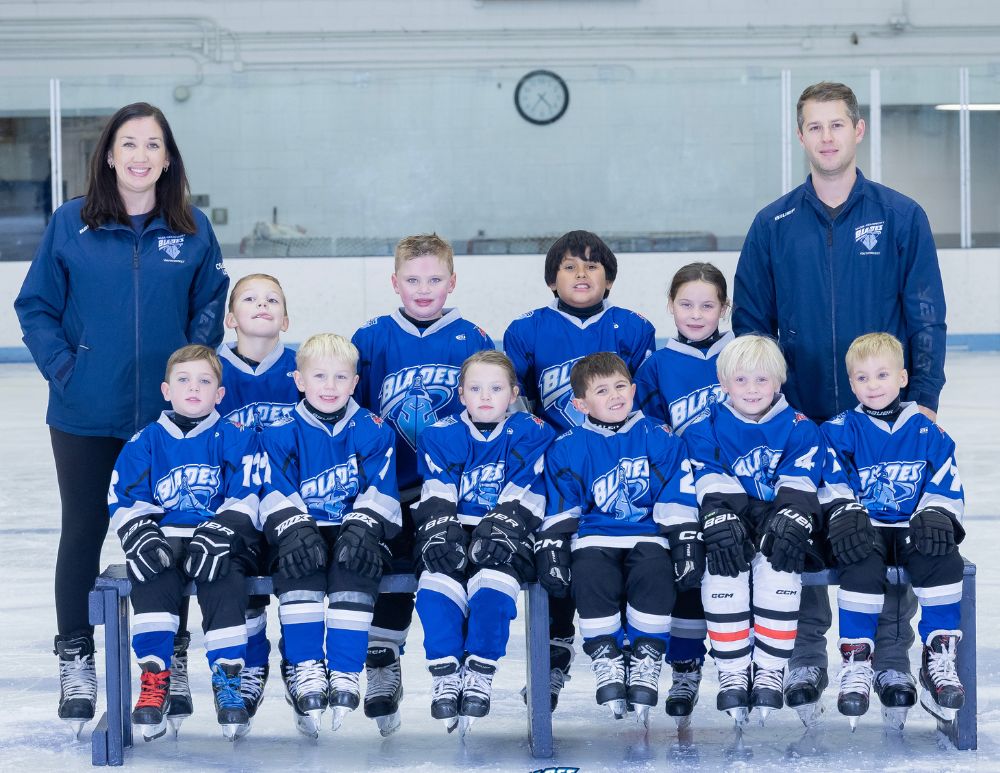
Mites (Ages 4–8)
Mite hockey is often a child’s first experience playing organized hockey. At this level, the focus is on learning basic skating and puck skills through fun, small-area games. Practices emphasize movement, balance, and coordination, with minimal structure and lots of encouragement. Mite hockey is designed to be fun, energetic, and pressure-free, helping kids fall in love with the game.
Squirts (Ages 9–10)
Squirt hockey builds on the fundamentals learned at the Mite level. Players begin developing stronger skating skills, puck control, passing, and shooting while learning basic team concepts. Games become more structured, but the emphasis remains on development, effort, and sportsmanship rather than competition.
Peewees (Ages 11–12)
At the Peewee level, players continue to refine their individual skills while learning more advanced team play. Practices focus on skating speed, positioning, puck movement, and game awareness. Players also begin learning responsibility, teamwork, and how to compete in a positive, respectful environment.
Bantams (Ages 13–14)
Bantam hockey introduces a faster pace and more physical awareness as players grow and mature. Skill development, conditioning, and hockey IQ become increasingly important. Coaches emphasize proper technique, respect for the game, and safe play while continuing to support individual growth and confidence.
Midgets (Ages 15–16)
Midget hockey prepares players for the next stages of their hockey journey, whether that’s high school hockey, recreational play, or simply enjoying the game long-term. Players focus on advanced skill development, leadership, teamwork, and sportsmanship. The goal at this level is to help athletes become confident, well-rounded players who understand the game and enjoy being part of a team.